Collections
Browse Jaeger-LeCoultre the way the house is built, one family at a time.
About these collections
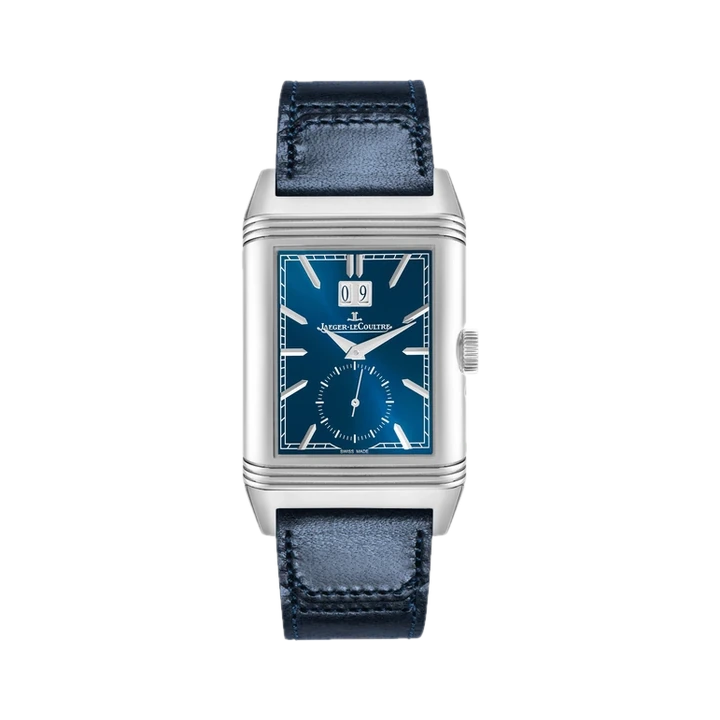
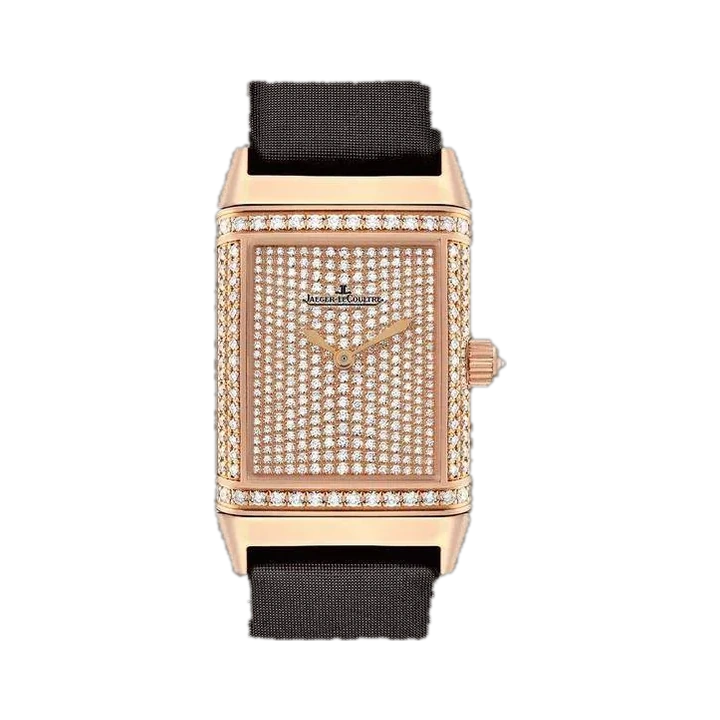
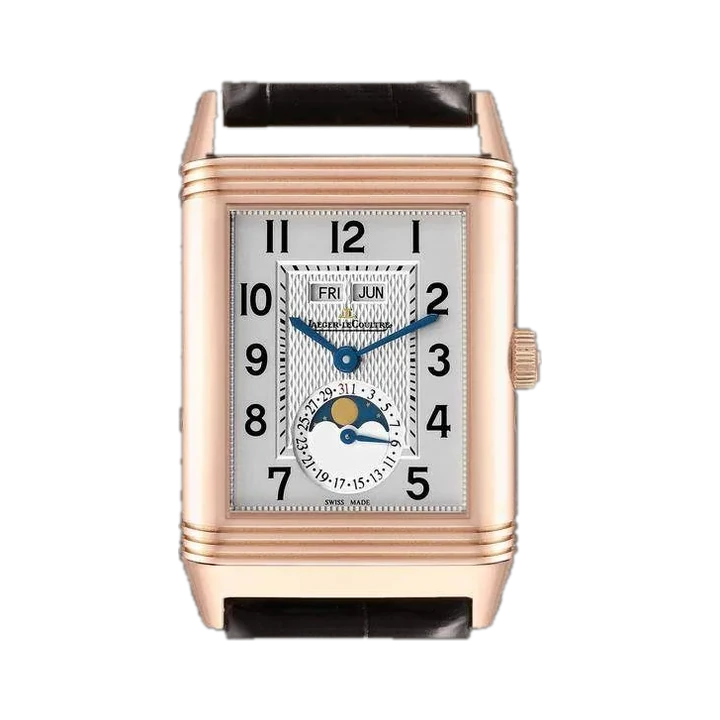
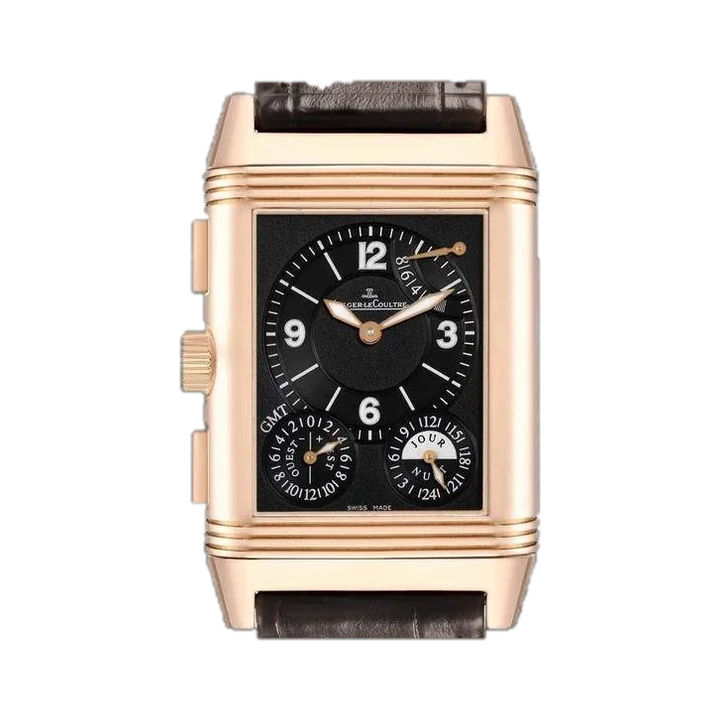
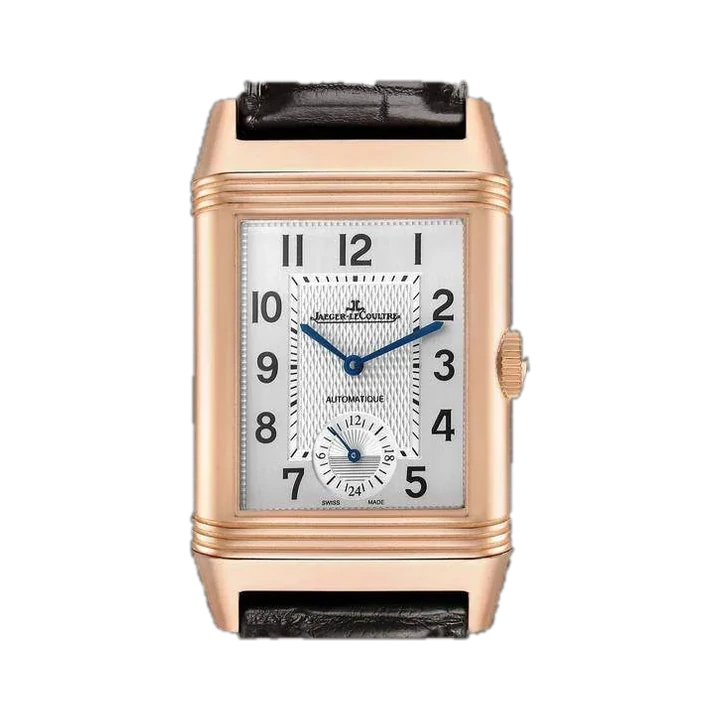
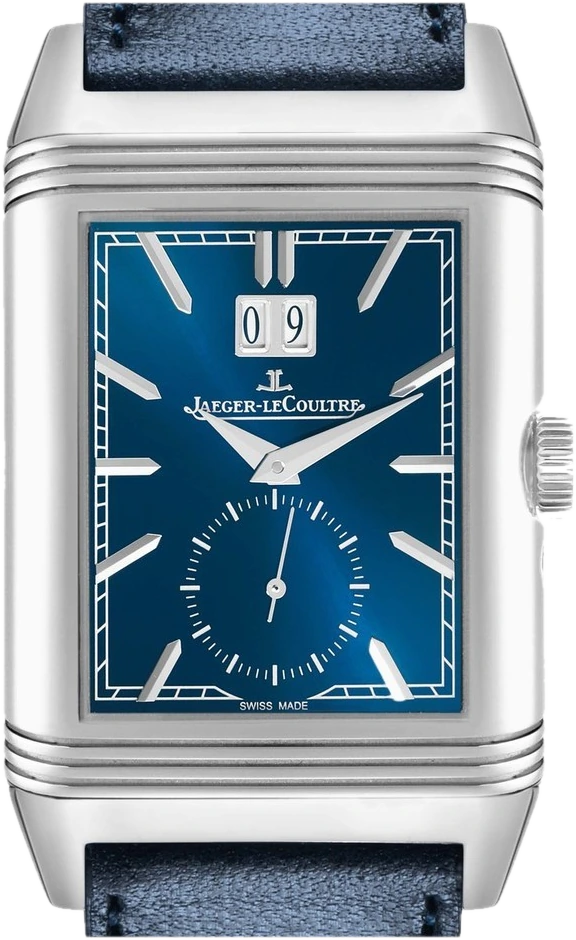
Reverso A 1931 rectangle on a case that flips over by hand.
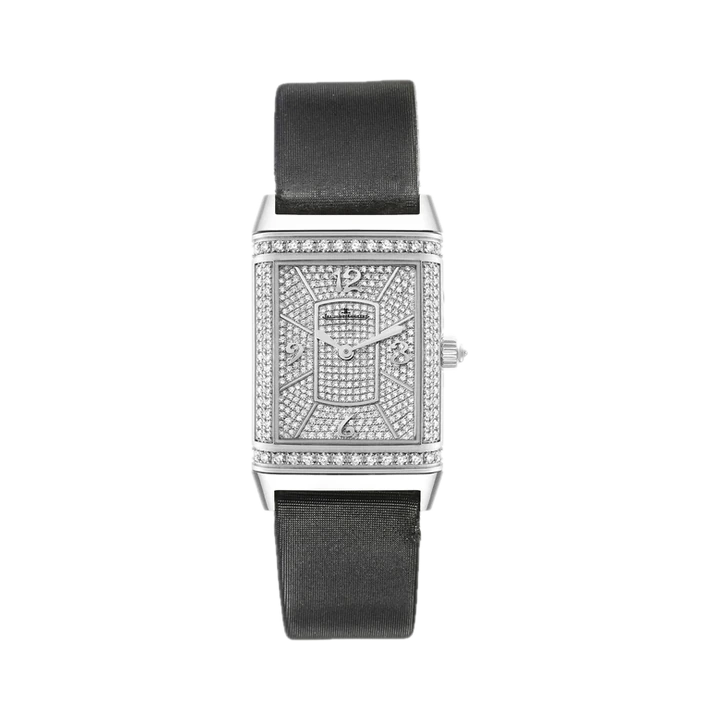
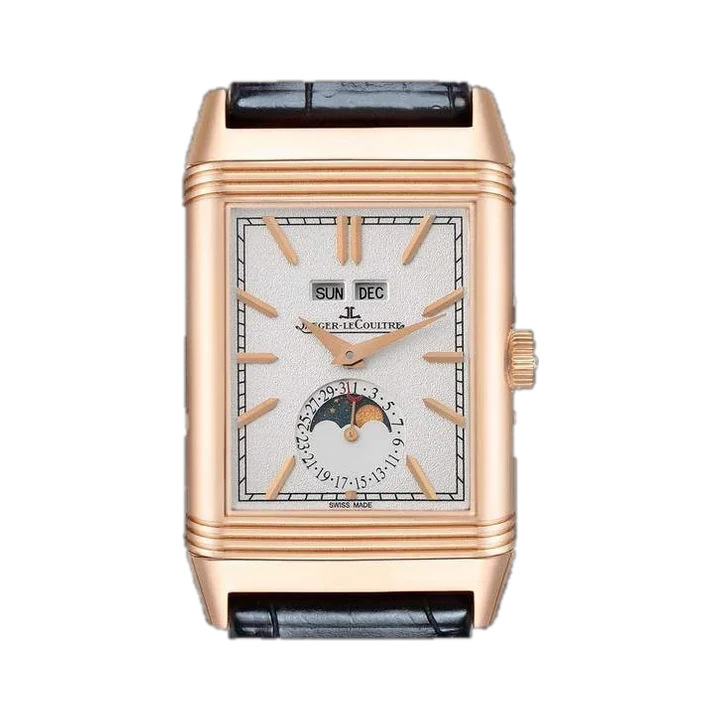
The Reverso arrived in 1931, patented by René-Alfred Chauvot and made for LeCoultre, with a case that slides and flips in its carrier so, as the story goes, polo players could turn the glass out of harm's way. The Art Deco shape survived a long quiet spell and a revival, and the case is still a rectangle with three gadroons top and bottom. The family runs from time only pieces to Duoface models carrying a second dial on the back.
How you know it
- flip case in its carrier
- three gadroons top and bottom
- Art Deco rectangular case
- blank reverse on plainer models
Sizes
roughly 34mm to 51mm long, 20mm to 31mm wide
Who it suits
For the buyer who wants a rectangular dress watch with real mechanism to it, and a plain back worth engraving.
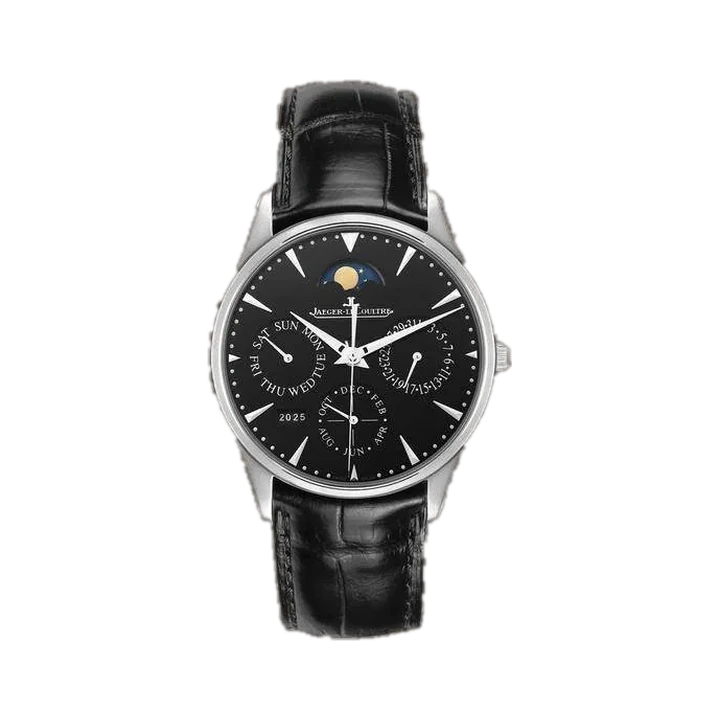
Master Jaeger-LeCoultre's classical family, from time and date to full calendar
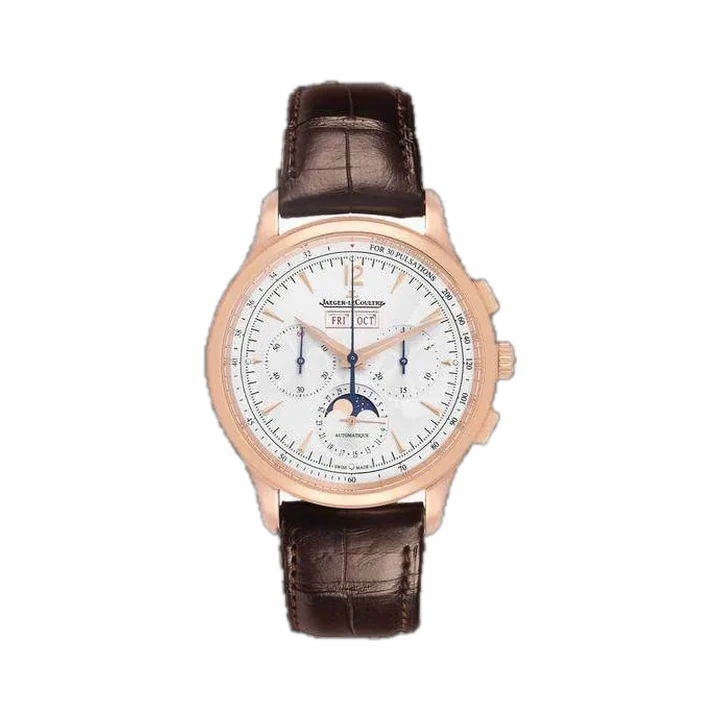
Master spans several Jaeger-LeCoultre lines, with Master Control as its core since 1992, introduced alongside the 1000 Hours Control. The 2020 generation moved to sunray brushed opaline dials with applied triangular markers. Sector dials appear on selected references, starting with the 2017 anniversary trio and continuing on recent Master Control Calendar models. The 2026 Master Control Chronometre adds chronometer certification and an integrated bracelet, sitting alongside those references rather than replacing them.
How you know it
- sunray or opaline dials
- applied triangular markers, dauphine hands
- slim bezel, open dial
- sapphire display caseback
Sizes
Master Control 36 to 40 mm, other lines run larger
Who it suits
For a buyer who wants a classical dress watch with in-house movements and hand-applied finishing, in a case that slides under a cuff.
Polaris The sporting side of the house, descended from a 1968 alarm diver
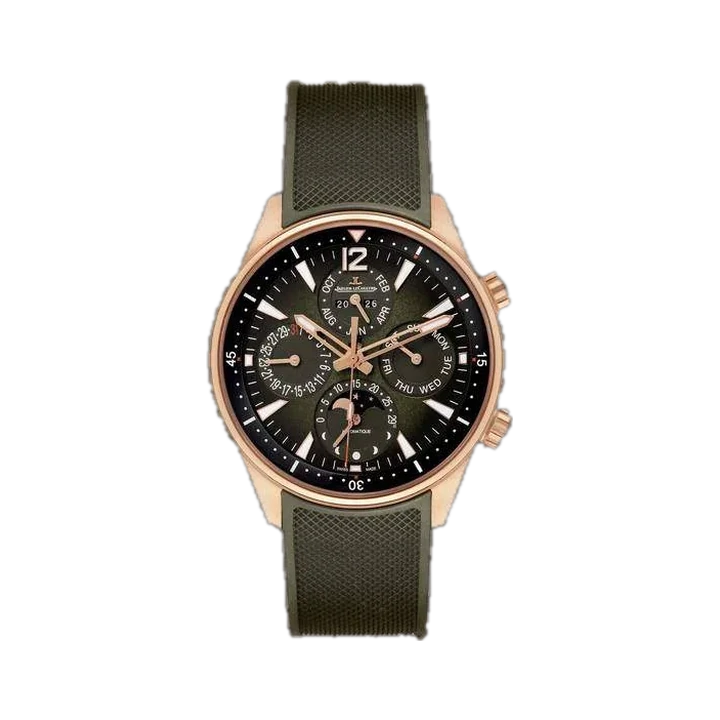
Polaris traces back to the Memovox Polaris diver's alarm of 1968, and the modern line arrived in 2018. It spans a straightforward date model through the Mariner divers and Memovox alarm up to chronographs and a perpetual calendar. Inner rotating bezels, a third crown on the alarm pieces and gradient lacquer dials on current models give it a character clearly separated from the Master family.
How you know it
- inner rotating bezel
- three crowns on alarm models
- trapezoidal applied indices
- three texture dial construction
Sizes
42 mm across the current line
Who it suits
Suits a buyer who wants one watch for daily and weekend wear without moving to a tool diver.
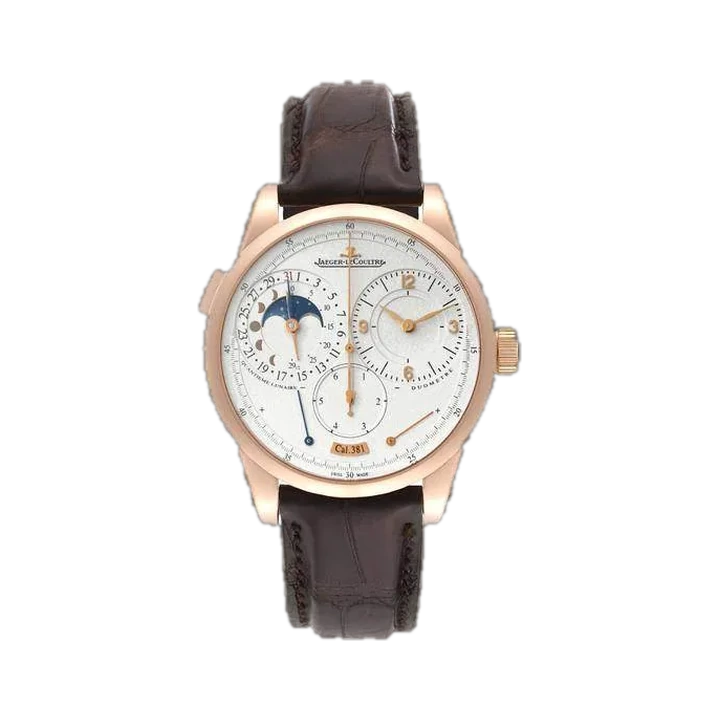
Duomètre Two power trains, one regulating organ, among the technical high points of the house
Duomètre launched in 2007 on the Dual-Wing principle. Two separate barrels and gear trains, one for timekeeping and one for the complication, run independently under a single shared regulating organ, so running a complication never draws power away from timekeeping. The dial splits into two halves, each with its own power reserve indicator, and a sapphire caseback shows the twin trains. A compact, technically focused family rather than a broad range.
How you know it
- Dual-Wing twin barrels
- two power reserve displays
- two-lobe dial, mostly symmetrical
- sapphire caseback over twin trains
Sizes
40.5 to 44 mm, current models 42.5 and 44 mm
Who it suits
For a collector who buys on movement architecture and wants a watch that rewards knowing what is inside it.
Watchmakers call Jaeger-LeCoultre the watchmaker’s watchmaker, and the reason sits in the movements: more than 1,200 calibres designed in one valley, many of them supplied to the houses everyone else collects. Our selection leads with the Reverso, the rectangular case patented in 1931 that pivots to hide its own dial.
The collection
11No pieces match those filters. Clear a filter, or message us and we will source it.
A watch in mind? Talk to Yousef.
Live pricing, sourcing and honest advice, buying, selling or trading. Fastest reply on WhatsApp, or come and see the piece in person.
Message on WhatsApp